Who is in the driver's seat?


Coinciding with National Primary Science Week comes a hard hitting ERO report on Science in the New Zealand Curriculum in Years 5-8.

I think ERO have really hit the nail on the head with this one. The Nature of Science is the "overarching and unifying" strand of NZ's science curriculum yet it often seems left alone, gathering dust in the corner. Meanwhile, the relentless crusade for children's self direction and so-called inquiry learning sweeps depth, substance and knowledge away. All in the name of student voice in learning.

Take a close look at some thinkers who I admire.

Bruce Hammonds blog posting on great science learning. Simple yet powerful.

Kath Murdoch on a very sound model of inquiry learning. A model we all aspire to.

Pam Hook on defining what is actually being learnt. Sorting what the real learning outcomes are.

Perry Rush  - who doesn't have an e-thing I can link to (sort that out Pezza).

All of the people above understand that teachers actually teaching still has a place before, during and after student-lead inquiry.

Don't get me wrong. The importance of student direction and student voice in learning is proven, in multiple research sources, to be the key to really unlocking learning for kids.

This is best exemplified in Graham Nuthall and Adrienne Alton-Lees's work. Please do read The Hidden Lives of Learners. I go to back to my own personal influences from Dewey to Elwin-Richardson and see the importance of the child's own direction of their learning.

So, where has the rot set in? In two places.

1.The focus on the process of inquiry (and ICT which can support it) has over riden the content of the inquiry.


The clamor to have an inquiry model in schools all over New Zealand has lead many schools to drop the ball on the content inside of those inquiry models. The ERO science report has exposed this.


2.The domination of ICT experts in school curriculum design.


Sadly the Jim Ferguson (RIP) prophecy has become reality. Those that did not get on ICT PD contracts in round 1, 2 and 3 got on in rounds 4, 5 and 6 on beyond. The pedagogical rationale was not strong enough to get in. But when those with strong pedagogical rational had all had a crack the others had to be picked to have their turn.

A perverse gang of schools have emerged in the latter stages of the ICT PD programme where the school principals seem happy to let their ICT PD facilitator design their school curriculum.

Frankly, the ICT clique do not have a monopoly on knowing about deep and rich learning. Plotting more ways for children to iPad, skype, googlgedoc, cloud, BYOD, student blog, and LMS their learning will not lead to stronger learning outcomes. Sadly I see lots of Steve Jobs (selling ICT) and not much of Seymor Papert (understanding ICT) in the current ICT PD Facilitator hegemony.


School leaders and teachers who are not ICT strong need to take back the leadership of learning, not all learning goodness flows from someone who knows a lots about ICT. Stop letting them use their knowledge of ICT to drive all of the learning design in your schools. The time is long overdue.

The ERO Science Report has illustrated this.

Let the comment debate begin...


YO (yo), you can't be serious can you?

Everyone is trying to make a buck and I don't have too much of a problem with firms giving schools a helping hand while getting something for themselves as well. Sponsorships and reward programmes are all over the educational landscape.

Every week one pedlar or another is pushing something on our school which is going to 'transform the way we do... ' whatever, blah, blah, blah. I open my mail with a big green recycling bin right next to my desk and 99% of offers, deals, partnerships, catalogues and exciting learning opportunities go right into it, often unopened. Sales emails head to the electronic version of my big green bin. But you can't blame business owners for trying to sell whatever it is they sell.

The sales push usually stops there. But today I had a follow-up sales phone call soliciting my reaction to some piece of spam I had trashed last week. The call had the hallmarks of the sort of pressure sales calls one gets from timeshare salespeople, vacuum cleaner, double glazing and/or re-roofing firms.

It rolled like this:

1. It started with lots of statements I would agree with (gets the poor sucker into a pattern of saying yes)
- You would agree that in these times children need....resilience, goal setting, kindness... blah, blah, blah
YES

- You want your school values promoted and reinforced.
YES

- You believe that anti bullying messages and promotion of reading are important.
YES

2. Then came the pitch. It would appear that lucky old Waimairi School can have the edifying experience of a 45 minute long assembly for the children which will solve many 21st century social ills AND demonstrate yo-yo tricks.

3. Next comes the peer pressure. "You may want to know that several schools near you are running this programme." They were named, I was surprised at their judgement seeing that I know a couple of the principals mentioned.... Did I mention yo-yos yet?

4. Finally, to close the deal comes the imperative. Act now! "We have only one slot in Christchurch left, we would hate for Waimairi School to missed out.

5. The fine print. It turns out that this 45 minute long assembly can be brought to our school direct from the US of A for free! Free I tell you! Free. No charge for a 45 minute long anti-bullying, pro-school, hooray for kindness, make good choices & always listen to your teachers assembly. Free!

Well, the assembly does involve people performing amazing tricks with yo-yos... I then have to sell their branded yo-yos at school for five days after the assembly. Direct, no commission or percentage to the school. Our reward is just seeing 45 minutes of the 'hooray for everything' performers.

It is all downhill for the yo-yo assembly pedlar from here because I love the Simpsons.

I remember the biting satire and social commentary that past Simpsons episodes contain. I have seen episode 16 from season three. Lisa Simpson's assessment of the educational merit of the yo-yo assembly still makes me chuckle.

Why is this yo-yo sales machine infiltrating New Zealand schools? Has anyone booking this yo-yo sales tour looked at any of the research that shows how little impact this sort of one-off lesson/assembly has on children's learning. Here is some to kick you off:


Bogner, F.X. (1998). The influence of short-term outdoor ecology education on long-term variables of environmental perspective. Journal of Environmental Education, 29(4), 17–29.


Chapman, D. (2004). Imparting values: More than a dilemma. New Zealand Journal of Geography, 117, 17–23.


Lave, J., & Wenger, E. (1991). Situated learning: Legitimate peripheral participation. Cambridge, UK:
Cambridge University Press. 

Here is some parent feedback from overseas

Here is an overseas parent discussion forum

The very wording of their email to me shows they don't understand New Zealand's school system or culture. We won't be enjoying "America's most popular assembly"

Yo! Thanks Simpsons, you saved the day again.


Hello ______________, 

Thanks so much for your time on the phone today!
Every summer, we visit hundreds of schools in the UK, Australia and New Zealand with no charge performances of The NED Show®, America’s Most Popular Assembly. Last year we saw over 2 dozen schools in the Auckland area; that tour was so amazingly successful, and the response so overwhelmingly positive, that have added additional tours in Christchurch and Wellington this year! 
We will be in the Christchurch area from July 23 through 27, 2012.  We are already scheduled at __________________________________________________; we’d love to come to your school, too!

We have an opening on July 27 at 11:30 am; please let me know as soon as possible if you’d like that spot.  Thanks!
Please see the references from some schools in Auckland last year:

“…the most common word for describing the NED show was EPIC!!! It doesn’t get much better than that around here! …we were SO impressed and TOTALLY in awe!!!”                  
-Joanne K., Principal, Auckland, NZ

“Many thanks for a wonderful show - We really appreciate the opportunity at presenting NED to our community. We have received many positive comments from staff, children and parents.”
-Toni W., Associate Principal, Auckland, NZ

“Thank you for supporting us and encouraging us to be champions.  I learned that if you follow your dream, your dream might come true!  My two goals are to get better at maths and also to be more athletic.  I am going to Never give up, Encourage others, and Do my best, just like NED!”
Waiyan R., student, age 10, Auckland, NZ

We have been sharing our positive message with schools for more than 21 years, and each year we see more than 2.2 million children worldwide!  
Our mission is to motivate and encourage your students to become champions at school and in life. We partner with your school to promote positive behavior and scholastic achievement. We do this by sharing the story of our character NED®, whose name is also an acronym: Never Give Up, Encourage Others, Do Your Best®.

Please explore our website at www.thenedshow.com

Here are the main things you should know about our program:

  • 45 minute all school assembly that includes follow up age level curriculum material

  • Discussion on the importance of kindness, setting goals, making good choices, and paying attention to teachers

  • At your request, our performer is able to incorporate topics important to your school such as anti-bullying, attendance, reading, or testing motivation

  • The message is reinforced in a fun and memorable way using humor, audience participation, story-telling, yo-yo tricks, and object lessons

  • Available at NO CHARGE through our “Pay it Forward” model: Your school receives the entire NED Program at no charge by simply making a selection of NED messaged items (yo-yo’s, instructional DVD’s, etc.) available for purchase for 5 school days following the show. There is no minimum sales requirement, and all items come with a 100% satisfaction guarantee. We believe in a “pay it forward” system, and the proceeds from your sale will allow us to visit another school at no charge. Any items that remain unsold can be returned to us, and we will pay the return shipping.

Thank you for taking the time to review this information. As our schedule fills quickly, it is best if you contact me for the most current information regarding remaining dates and times via email.  I welcome any questions you may have, and look forward to hearing from you soon.

Sincerely,


The books we buy more than once

A colleague recently asked me for a list of 'good education related' books to read over the summer break. When I looked through my office and home bookshelves I found that the books that I instinctively wanted to recommend to him were all book titles that I have had to buy more than once.


They are books that are just such a good read, with such a good message, that they become the ones you lend to people, never to be seen again. They are the keepers. The person you lend it to keeps it.


Keeper books stand out from most others in your book collection because you actually notice that you have lost your copy of them when you find yourself wanting to refer to them time after time.


This time I have sent him a list rather than given him my copy of them. I am sure that they will become keepers in his collection.


What are your 'keeper' titles? The books you have repurchased ( in my case sometimes up to four times).
Here are some of mine.


The Hidden Lives of Learners
Graham Nuthall
MUST READ and then re-read. Then lend to someone and don't expect to get it back.
The Big Picture: Education is Everyone's Business
Dennis Littkey.
An absolutely wonderful book, I have lost track of the number of copies I have bought, lent and lost.
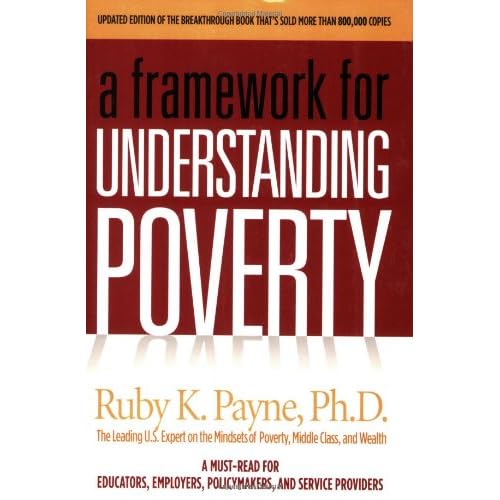
A Framework for Understanding Poverty
Ruby Payne
Pretty essential for teachers in all schools I reckon.
Discipline, Democracy and Diversity
Angus MacFarlane
Gotta love Angus and his thinking.
The Kiss and the Ghost: Sylvia Ashton Warner & New Zealand
Jones & Middleton
and....
a couple of 'keeper' videos to round it all off..
The Song of the Bird

Elwyn Richardson
and... Sylvia Ashton Warner (in three parts)


This time it's personal


The team supporting the teams during the Rugby World Cup.

This post is a 'lift' from my bit in our school newsletter this week but I do want to the world to know how much I admire our staff.

"At the end of 2010 I said that the most trying year we could face was over and we looked forward to a brighter 2011. Well... I was wrong, very wrong. As a wider school community (children, parents, families, staff and neighbours) we had it all thrown at us this year. The death and injury of loved ones, damage to our homes and workplaces, loss of businesses, income and jobs, broken infrastructure and facilities, and separation of families. Layered over all of this has been deep and ongoing psychological harm, anxiety and depression, children and adults alike. 

Yet...from this awful mess Waimairi School has functioned as a safe and happy place. In addition to putting self and family behind duty of care to your children, twice during major quakes during school hours (and many big after shocks) the school staff have got up each morning, put on their professional 'game faces', driven over damaged roads and through traffic snarls to be the best support they can be for our students.


This on its own is admirable, but despite many weeks of closure and disruption we have fostered and maintained academic, sporting and cultural excellence. The whole staff have given everything they have to give to your children this year. It has left them emotionally and physically drained but I know they would not have done anything differently. Your children's well-being is worth the personal price. So in this context, and aware of the regular taunts about teachers' holidays, I hope that in 2011 of all years, you do wish them all a restful holiday break. You need them rested up and ready for 2012 and beyond."


Teachers and support staff all over the world would like to think that if unprecedented disaster hits you would cope and do well. In 2011 the staff at Waimairi School, and all Christchurch teachers have shown that you can.

Blinded by the light

Most lights these days are powered by electricity but evidently there may be some still oil powered, snake oil that is.


Who would have thought that a blog posting about LIGHT could generate such a great soundtrack? If you don't like this posting at least you can enjoy the sounds. Start the LIGHT song that you like the best then scroll to read with the music playing.


______________________________________________________


So here is the NZ Herald education article about the Philips Lighting SchoolVision lighting system.
It is important to read, and remember, the wording used in this 'so called' news article. It will come back to you time and time again very soon. Rather than being cutting edge educational journalism it would appear that the publicity department of Philips helped out with lots of the wording. Here is the brochure from Philips. Compare and contrast the text with the unquestioned lifts from the corporate publicity. Educational journalism needs to provide balance not just deliver text from a corporate press release. Where is the journalistic balance and thinking in the Herald article? If Philips want advertising why don't they just buy ad space in the paper? They don't need to do so with journalism like this.


Don't feel bad NZ Herald there are plenty of other educational reports in big papers just using the Philips publicity words and pretending they are 'truth'


The Guardian and The Observer 


Not Given LIGHTly 
What annoys me about a claim that a lighting system can improve student achievement? Well it is the very claim that it does so that winds me up. Here is some Philips publicity.
For principals "However, with multiple stakeholders to please including teachers, parents and governors, one of your
most important goals will also be to improve your school’s results. Not only will it affect your school’s rating, it could also secure additional funding to help with overstretched budgets and limited resources."
Not in my school matey! It is our dedicated and skilled teachers who do that, not the lighting system.
"SchoolVision has proven results. The solution was first researched in a year-long, independent study by Universitätsklinikum Hamburg-Eppendorf with 166 pupils and 18 teachers. The results showed that: 
• Reading speed increased by almost 35% 
• Frequency of errors reduced by almost 45% 
• Hyperactive behaviour also dropped by an astonishing 76%

These positive findings were confirmed and endorsed by a second, more extensive study carried out by the University of Twente. The research at Disselboom primary school in Wintelre between December 2009 and September 2010 concluded that: 
• Children score on average 18% higher in a concentration test
• Are more motivated in the long term • Appreciate their learning environment more, both in the short and long term 
• Co-operative learning behaviour is positively influenced by the ‘Calm’ setting
In short, “Light makes a positive difference” in the things that really matter like concentration, motivation and co-operative learning."

You LIGHT Up My Life


Can we shine some light on the 'research' that claims that the  Philips system has a significant effect on mood, energy levels and ability to concentrate? Yes we can...sort of...


Lux Magazine says sort of the same thing


So go deeper...
The source of all this 'research talk' to sell a lighting system is Applicability and efficacy of variable light in schools Physiology & Behavior
Volume 105, Issue 3, 1 February 2012, Pages 621-627
Read the abstract! 
Turn the LIGHTS on


"Two classrooms each in two separate schools were studied over a period of nine months; one class in each school served as an intervention group, and a parallel class in each school served as a control group. The effects of the individual VL programs were assessed using standardized test modules. The overall effect was measured using standardized surveys of students and teachers given at the beginning and the end of the project. The results showed that the students made fewer errors, particularly fewer errors of omission, on a standardized test of attention under the VL “Concentrate” program. Reading speed, as measured using standardized reading tests, rose significantly. Reading comprehension also improved, but this improvement was not statistically significant. In contrast, the achievement motivation of the students and the classroom atmosphere did not change over the nine-month period.


Hmmm. The close attention that New Zealand educators pay to the value of reading comprehension, as opposed to reading speed and reading errors (which has kept us at the top of OECD reading achievement comparison tables year on year) suggests that we can't gain much from a lighting system making our kids read faster with fewer errors.


Where was the Barkmann et. al. research presented? At the Society for Light Treatment and Biological Rhythms conference. Check out page 2 of the programme. Major Sponsor...Philips


The attempt to re-create the educational gains in a lab study also generates skepticism

EFFECT OF LIGHT IN SCHOOLS: REPLICATION OF THE FIELD STUDY IN LAB
N. Wessolowski, C. Barkmann, M. Schulte-Markwort
University Medical Center Hamburg-Eppendorf, Department of Psychosomatics in Children and Adolescents, Germany

Objectives: In a field study with 116 pupils, the use of Schoolvision in school classes resulted in a significant increase of attention/concentration and reading speed as well as a significant decrease of restlessness (Wessolowski et. al., 2009). Schoolvision by Philips has preset lighting programs differing in brightness and color temperature. The aim of this study was to replicate these findings in a standardized laboratory setting.

Methods: In a randomized two-group cross-sectional experiment a sample of n=95 healthy adults received either optimized light programs (Schoolvision) or control conditions (500 lx / 3200 K). Optimized light conditions for the treatment group were bright daylight (1300 lx / 5600 K) to induce attention and less bright warm-white light (600 lx / 3000 K) to reduce restlessness. Attention was measured with the d2-test of Brickenkamp and the reading test of Schneider et al. To determine restlessness an optical measurement method named ““Childmove”” was used, which detects changes in pixel values within a video. Childmove was developed for the measurement of whole school classes (Koenig et al., i.P.) but it can also be used in other settings.

Results: The results of the attention/concentration testing showed a significant advantage of 25% from using Schoolvision in the treatment group in terms of the d2 test error rate compared to the control group with standard light (F=2.839, df=1, p=.048, ␣2=.031). This is comparable to the effect described by the school study. In addition, the results for the working speed of the d2 test also showed a significant advantage of 11% for the treatment group (F=3.803, df=1, p=.028, ␣2=.065). The effect outranged the result of working speed in the school study. In contrast to the results of the d2 test, the results of the reading test could not be replicated in lab. The results concerning motoric agitation (restlessness) showed a faster decrease by using Schoolvision (after 5 min: F=2.897, df=1, p=.0.046, ␣2=.031) as reported in the school study. However, unlike the findings of the school study, a decrease in restlessness was not affected.

Conclusions: In sum, the results of the school study could be replicated: The results in the lab showed an increase of attention by using Schoolvision: The experimental group made fewer errors and had a higher working speed in the d2 test. The results of the reading test cannot be replicated, assumedly because the participating college students (59%) are very practiced in reading long texts under inconvenient environmental conditions so that the reading test was not sensitive enough for this sample. There is also a faster decrease of motoric agitation by adults detected in the lab but in contrast to the school study no relevant total decrease was found. An analysis of the z-transformed school and lab values showed that the baseline scores of the pupils in the schools were more than four times higher than those of adults in the lab. On closer inspection of the low baseline scores it was possible to find a faster decrease for the experimental group but not a higher decrease over a longer time, because both groups already almost reached the minimum right after the beginning. 

Come on baby LIGHT my fire


The funny bit - Don't Turn the LIGHTS On


Mayer Hawthorne sings about LIGHTS and this whole thing reeks of the Hawthorne Effect.


The irony is that the Hawthorne effect was all about light levels.
The Hawthorne effect is a form of reactivity whereby subjects improve or modify an aspect of their behavior being experimentally measured simply in response to the fact that they know they are being studied,[1][2] not in response to any particular experimental manipulation.
The term was coined in 1950 by Henry A. Landsberger[3] when analysing older experiments from 1924-1932 at the Hawthorne Works (a Western Electric factory outside Chicago). Hawthorne Works had commissioned a study to see if its workers would become more productive in higher or lower levels of light. The workers' productivity seemed to improve when changes were made and slumped when the study was concluded. It was suggested that the productivity gain occurred due to the impact of the motivational effect on the workers as a result of the interest being shown in them. Although illumination research of workplace lighting formed the basis of the Hawthorne effect, other changes such as maintaining clean work stations, clearing floors of obstacles, and even relocating workstations resulted in increased productivity for short periods. Thus the term is used to identify any type of short-lived increase in productivity
The killer bit
From the NZ Herald story which kicked off this post.. 
"The Education Ministry's website says evidence suggests learning outcomes improve in spaces that have daylight as the main source of lighting." So embrace classroom 'windows' (the first time a Mac guy like me has said that) and don't think that the Philips Company is going to lift student achievement any more than an interactive whiteboard company will.


Electric LIGHT Orchestra 


Touch devices 'back to the future' uh-oh

A website called bloomsapps keeps appearing in my Twitter feed as a recommended reference. So I took a look and was told on the front page that  "it is essential for educators to understand how to implement Blooms (sic) in the classroom using the apps that are available." Just why this is an educational imperative is not stated but it is linked to growing use of iOS devices in American school districts.


Bloom's Taxonomy and Anderson's revision, offer, at best, a set of considerations for teacher planning to ensure balanced cognitive provision. I don't believe there is any gold in there for looking at what children actually learn. A side note (not explored in this post is a general observation that I have about many educators focussing totally on the cognitive domain of Bloom's work and often not even thinking about the affective and psychomotor. Let alone the parallel nature of the 'top three' - see Anderson & Kraftwhol, 2001. Renaming does not show deep understanding of the revision ). But all of that is for another day/blog post.


Let's go back to the 1990s. Computers in classrooms (as opposed to touch devices in classrooms in 2011) were all the rage. So much potential and so much crap. Educational software was the discussion point of too many teacher conferences. And...having followed the #ulearn11 Twitter hashtag over the last three days I have a sinking feeling about the word apps being used in the same way. Too much talk about 'great apps', 'harvesting apps' and 'apps we must have'.


If the hopefully long dead Bailey's Book House and Milly's Maths House have not yet been awakened as zombies from their well-deserved graves by the voodoo priests of the iOS booster gang, then it is sadly not too far away I fear.


The missed opportunity often spoken about by Seymour Papert is well and truly missed when we consider money spent vs. learning gained from the classroom computer. 


I suggest that many 'educational' touch app developers also do not know how to do this. They try to re-create school on a touch device. How many popular touch apps are 'latinesque? or bluntly put schoolesque?  


Now we bounce on to the touch device era without much overt consideration of learning potential (and money already spent). Having touch devices in a school does not equal learning facilitated by touch devices.


I believe that if it offers children nothing up front then it is a great app. My friend Marco Torres often retells his 'oscilloscope anecdote' in his presentations. 


Marco makes an overlooked but important point. Schools need to have devices like iPods and iPads in them because they offer apps like oscilloscopes, decibel meters and voice/video recording tools. All things that offer nothing to a child without skilled teacher input. I want lots of touch devices in our school because they are a means for us to have the tools which we could never afford to have. From musical instruments to science tools, these are the killer apps.

The power of the touch apps is not in the digital regurgitation of flashcards and maths games but in the blank page stuff. A good school art supply room will never be stocked with colouring books and paint by numbers kits. Good school touch devices should mirror that. Produce, don't consume. Explore, don't be shown. If a child can use the app at home then it probably belongs at home (with the colouring-in books and paint by numbers kits). The challenge to myself and others is to make sure the amazing power of touch devices amplifies learning at school rather than baby sitting kids through school.     


But who am I to tell you what to do?


So.... go for it. If you take a look at why you have/want iPods/iPads in your school and if you decide that rote maths and spelling learning in a 'digital' way is for you then buy them. All you have to do is rationalise the expense. I find that many schools who rationalise the expense on the basis of engaging children in maths and spelling apps also have charters and strategic plans which promote higher order thinking and student directed learning. Are these congruent?  


Write this in your charter; We believe in B.F. Skinner's thinking around behaviorism and are investing $XXXXXX.XX in touch devices to allow children to do and have reinforced what we want to teach.
This stuff is great for special needs and IEP kids - go for it. At every Case Conference we can find an app, and probably should do so. 


But is it why you want everyone to have touch device access? Do what you will in your own school, but don't just plan to buy some touch devices because they are the flavour of the month. The 1990s words of Mark Brown come back to me "computers are not inherently good" and neither are touch devices. 


We have been through the painful misunderstood rationale behind the  purchase of classroom computers, then laptops, then interactive whiteboards. Let's not do another round with touch devices.


There is a very real danger that current educational seduction with touch devices will rewind some advances in thinking about the pedagogical role of ICT.


Who is currently doing the big thinking on this? The amazing Dorothy Burt is. Funny how the 'app' and the 'App' have evolved. The Manaiakalani Project is all about, and successful because of, blank pages rather than cute apps made available on tap to her community. 


And a big nod to Chris in Room 22 - a true creative pioneer in the digital forest :)

Full Circle


Rock On Waimairi School.


You did it and you did it so well. My last posting was 10 long weeks ago we left the school all fired up about a term of dance, drama and music. At 8:20 in the morning of the first day of Term Three the school was alive with adults showing the children how a school can become a centre of arts performances. The challenge to all was to create and interpret so that by the end of term our school could become the 'new Arts Centre' of Christchurch.

We did it. Here is the full programme. Our teachers and support staff really did give the children a stunning term of learning and creativity. Our Arts Centre Finale was enjoyed by the whole community. Enough with the words, enjoy the pictures. After ten weeks work the kids are the performers in the same spaces.

Teachers, support staff, children and parents all made for a great term. We LOVE the NZ Curriculum, and in our battered city we loved having an Arts Centre back for a day( complete with with the yummy food stalls).