The return of the Blog


After a VERY long break from blogging (with building a new school and being seconded to close down another one in the interlude) I'm back.

My BoT have suggested I get back into the blogging habit - and I agree with them.

Cheers for the nudge Emma and Jeremy.

Photo is....Learning Environments New Zealand (LENZ) event held at Waimairi School this month. LENZ is where educators, architects, and designers come together to explore possibilities for creating awesome learning environments.   

Musing on the demise of Learning Media NZ

Why the ghost of Uncle Russell is on my mind tonight (and how I am trying to honour his memory).


Declarations of personal interests to temper your reactions to this post.

1. I am proud to be an educator in, and advocate for,  the New Zealand State School System, as founded by Beeby (influenced by Dewey)  during the first Labour Government in the late 1930s.


2. Through marriage I am proud of my family relationship with Russell Clark and his work.


As illustrator for the New Zealand Listener and New Zealand School Journal, Russell Clark’s art became part of New Zealanders’ daily lives from the 1940s to 1970s.


Clark attended Canterbury College School of Art, in Christchurch from 1922 to 1928,... It was as a painter and sculptor that Clark contributed to an emerging Modernist movement in Post-War New Zealand.  


In 1944 he was appointed Pacific War Artist by the New Zealand government, and this experience in Polynesia and Melanesia stimulated his inquiry into Māori art and culture, culminating in the Urewera series (1949-1951). Ironically, these works also reveal the influence of British artists Henry Moore and Barabara Hepworth, particularly in the use of stylised monumental forms which in turn were influenced by Pre-Columbian and African art. 


In 1947 he was appointed to the staff at Canterbury University College School of Art. Although criticised for his eclecticism, Clark’s association with 'The Group' and his Urewera series highlight his important contribution to New Zealand’s cultural development. 


His work is represented in the collections of the Christchurch Art Gallery and the Museum of New Zealand - Te Papa Tongarewa, the Auckland Art Gallery and many other public and private collections in New Zealand."


Anyway... Today I was really angry listening to the Minster of Finance on the evening news telling us all how Learning Media has to be wound up because it can't make a profit. 


Respectfully, the important fact is that the provision of quality educational resources is not about profit Minister!

The closure of  this smallest of the State Owned Enterprises will not swing the government  books back into surplus. All it will do is open the door to more darn pedlars.  My intolerance of commercial firms 'selling' resources to schools is reaching breaking point. The vast majority of resources being sold to schools are pedagogical crap.

At our school we have the smallest budget ever for buying 'so-called' resources for one good reason. They don't make a difference to learning and achievement. As a principal I have been able to say "get lost" to so many resource sales people because I know that the free, high quality, non commercial Learning Media products will take care of that need for us.

There is no such thing as a free lunch. Free School Journals provided to schools are only free if they are authored by people who work to provide them for artistic and educational merit. If School Journal production  and editorial content is offered to commercial firms for the sake of profit things change. And can change in a sinister way.

To prove the point I have to go to the extreme. Read this article in the New York Review of Books.  
Now  consider curriculum. We have to accept that any curriculum in a state school system can never be politically neutral. The very definition of 'state curriculum' means that the government of the day sets the curricular tone. But the heritage of the NZ School Journal is all about exposing children to high quality art and writing, not a curriculum ideology. 

If content is open to profit based tenders then the resource pedlars come on in. They will pitch towards offering narrow National Standards content. Worse still, they will do so in a shallow pedagogical way. If the majority of the current resource-for-sale rubbish has a chance to get into the School Journals then heaven help us all.

The 'provider and examiner' corruption is a problem already evident overseas. In the UK, USA and Australia there is a disturbing trend. Commercial companies provide exams and assessment tools to the school system. They also helpfully also sell textbooks and resources to help kids pass the exams. So what is the role of a teacher in such a system? 

Look at the HMHCO website
They sell the assessment tools 
Teachers just have to turn up to work, use the resources provided, and get the kids to pass the tests. 

New Zealand is better than this. As a taxpayer I am happy to pay for the small cost of Learning Media to keep on being a tiny little loss-making quirky organisation. One that keeps on sending schools free resources. Resources which are artistic and creative and also grow the careers of New Zealand's budding  writers. 

If that is not possible then end it now. Stop the School Journals.  Stop them before HMHCO  (or a similar company) offers the NZ Government a good deal to publish them for us.

After digesting today's news an unscientific survey of the Clark family has support for my idea of ending it now, after 100 glorious years, rather than feeding kids a newer corporate-backed-efficient-resource from now on. 

Without the School Journal we may not have had arts and literary careers from these School Journal contributors  ...
 Margaret Mahy, Janet Frame, Elsie Locke, James K. Baxter, Witi Ihimaera, Patricia Grace, Joy Cowley, Jack Lasenby, David Hill, Norman Bilbrough; and artists, illustrators and photographers such as Don Binney, Russell Clark, Cliff Whiting, Dick Frizzell, Mervyn Taylor, Gil Hanly, Ans Westra, Gavin Bishop, 

What do you think about a 'free to schools' but profitable for someone-else School Journal future?

Theatre of light and sound


Would you rather see a movie with no sound, or hear a movie with no picture? Frankly I would rather do neither. I want to experience a full movie with pictures and sound for myself. 

Sometimes schools think that all staff members will have profound learning experiences by hearing about (or seeing pictures of) a few staff members' learning experiences. School leaders sometimes mistakenly think that by sending 'some' staff to a conference, or on a tour of other innovative schools, that those left behind and who then get to hear about and/or see the photos  will have the same learning experience as those who went away in the first place   [credit to Tony Burkin from Interlead for that great analogy].

'Everyone or no no one' is our mantra when it comes to re-visioning our school site in a new post-quake master plan. If we shift towards flexible, team teaching environments then every employee needs to understand why (and what it might look like) here is how we rolled...


After tireless fundraising (assisted by parents and the wider school community) the whole staff and BOT reps from Waimairi have returned safely from a week long study tour in Melbourne.

The mission was to look at, and reflect upon, a wide variety of learning environments. The study tour was not about the buildings. It was about looking at the underpinning values & beliefs about learning and associated pedagogies in each school. The secondary consideration was how the architecture supported and/or hindered the realisation of the former.

The final day of tour consisted of Dr Julia Atkin, Richard Leonard and Lisa Horton facilitating a reflective and visioning workshop with our team. This work will feed into the next master planning workshop for our cluster of schools.

What did we see?

-A school created by merger working in a brand new building.
-A school only a few years old working with purpose designed modern flexible learning spaces
-An old school with a clear pedagogical vision making magic happen inside ageing buildings.
-A school that has been open plan in the 1970s, walled up as single cell in the 1980s and then reopened as flexible learning environments in the 1990s.

What did we learn?
-A clear set of values and beliefs about learning (developed by and owned by the whole staff) are essential.
-When planning for change the whole team need to take part. BOT members and teachers are only 1/2 Waimairi's total payroll - why would only 1/2 of the team have inspiration and reflection before making decisions about the school's future?
-The New Zealand Curriculum ROCKS! It is the missing element in some visionary Australian schools' success.

It is not all about going on an overseas  trip - the principles of andragogical learning and vicarious learning for staff & BOT members can be realised by a team visit to almost any learning environment. Just down the road or just over the Tasman Sea.


Why educators should  get to see other educators in acton.

Teacher Self efficacy has a huge effect on student achievement.

Vicarious experience provided by social models is a way of creating efficacy. Some believe it to be pure imitation without actual learning, but nothing is further from the truth.  80 to 100% of what we know is learned vicariously, or by observing others do something and remembering what was seen. That's why doctors have Residency and Internship, mentors have to do practice-teaching, and that's why society exists at its core; we all learn from one another.  

Vicarious learning is learning by observation (aka modeling, social learning, or just the 'monkey-see-monkey-do' phenomenon). We now know that social learning is the most salient type of learning we possess.How does this occur? Social learning is mediated by the Mirror Neuron system in the brain. The mirror neuron system appears to be responsible for the mediation of musical experience (Molnar & Overy, 2006). This finding replicates what musicians have known all along; that they need exposure to other musicians to flourish in their art.

This is why we make sure as many of our staff as possible get to see other teachers at work. 4 minute walk-thrus or whole staff tours - the brain science is the same.

A River Runs Through It


Google Earth has finally done a photo pass over Waimairi School in the 'post quake' time period. I have captured the shot (yes, yes, copyright credit to Google Maps) to post here for two important reasons.

The first is to keep a historical photo somewhere. The next time the Google photo satellite passes over things may have changed.

The second is to reveal and explain what the quakes did to a part of our school and what might need to change at Waimairi as a result.


To the right of the black arrow is the now revealed old river. Forgotten generations ago. For those familiar with post-quake Waimairi School you will be able to join the dots in your mind. As you read these bullet points let your eye move across the picture from right to left.

- The great gushing lake of liquefaction sand and water that swamped us as we stood waiting on the back field after each quake.
- The twisted doorframe and cracking in Room 14.
- The big crack up the centre of the netball courts.
- The warped hall with its dropping floor and roof line and sticking doors.

We can build over the top of mother nature, but we can't beat her.

Lucas and Associates sure showed us this with their stunning historical map/modern quake damage map overlays.

It is important to note that all buildings have had inspections and are safe for us to occupy. The question is whether or not it is economic to repair them where they are or do a bit of a site re-design. These decisions are in the hands of the Master Planners, not me as a blogging principal. Please don't read this as an announcement on the future of any of our buildings.

But if you are part of our school community do make sure you take part in the information and consultation on our site master planning that will happen in the first part of Term 3.

Included for historical record are the two black circles on the picture marking the two 20,000 litre 'poo tanks' that captured our sewerage waste when the silted up Tillman Ave sewer was out of action after the quakes. These tanks and the port-a-loos are what finally got us open again after 5 weeks of closure.


I did take an extensive collection of immediate quake damage photos of the school. They are for publication much later. We don't need to re-look at those pictures just now as our mental health recovers.

Shamed back into blogging and loving it.

Beaten back into action by a group of ten year olds.

The quality and quantity of written work now flowing into the public domain by Room 14 at our school has reminded me of the importance of writing.

For four years I managed to keep up a decent rate of blogging myself. These wonderful youngsters pushed me back into the habit. So here I go again.

I have told them that my blog has got old and rusty so they will keep me honest and keep up a weekly post at least.

Enjoy their work here http://www.waimairi.school.nz/room-14-blog-roll.html while I cook up my next blog post.

Who is in the driver's seat?


Coinciding with National Primary Science Week comes a hard hitting ERO report on Science in the New Zealand Curriculum in Years 5-8.

I think ERO have really hit the nail on the head with this one. The Nature of Science is the "overarching and unifying" strand of NZ's science curriculum yet it often seems left alone, gathering dust in the corner. Meanwhile, the relentless crusade for children's self direction and so-called inquiry learning sweeps depth, substance and knowledge away. All in the name of student voice in learning.

Take a close look at some thinkers who I admire.

Bruce Hammonds blog posting on great science learning. Simple yet powerful.

Kath Murdoch on a very sound model of inquiry learning. A model we all aspire to.

Pam Hook on defining what is actually being learnt. Sorting what the real learning outcomes are.

Perry Rush  - who doesn't have an e-thing I can link to (sort that out Pezza).

All of the people above understand that teachers actually teaching still has a place before, during and after student-lead inquiry.

Don't get me wrong. The importance of student direction and student voice in learning is proven, in multiple research sources, to be the key to really unlocking learning for kids.

This is best exemplified in Graham Nuthall and Adrienne Alton-Lees's work. Please do read The Hidden Lives of Learners. I go to back to my own personal influences from Dewey to Elwin-Richardson and see the importance of the child's own direction of their learning.

So, where has the rot set in? In two places.

1.The focus on the process of inquiry (and ICT which can support it) has over riden the content of the inquiry.


The clamor to have an inquiry model in schools all over New Zealand has lead many schools to drop the ball on the content inside of those inquiry models. The ERO science report has exposed this.


2.The domination of ICT experts in school curriculum design.


Sadly the Jim Ferguson (RIP) prophecy has become reality. Those that did not get on ICT PD contracts in round 1, 2 and 3 got on in rounds 4, 5 and 6 on beyond. The pedagogical rationale was not strong enough to get in. But when those with strong pedagogical rational had all had a crack the others had to be picked to have their turn.

A perverse gang of schools have emerged in the latter stages of the ICT PD programme where the school principals seem happy to let their ICT PD facilitator design their school curriculum.

Frankly, the ICT clique do not have a monopoly on knowing about deep and rich learning. Plotting more ways for children to iPad, skype, googlgedoc, cloud, BYOD, student blog, and LMS their learning will not lead to stronger learning outcomes. Sadly I see lots of Steve Jobs (selling ICT) and not much of Seymor Papert (understanding ICT) in the current ICT PD Facilitator hegemony.


School leaders and teachers who are not ICT strong need to take back the leadership of learning, not all learning goodness flows from someone who knows a lots about ICT. Stop letting them use their knowledge of ICT to drive all of the learning design in your schools. The time is long overdue.

The ERO Science Report has illustrated this.

Let the comment debate begin...


YO (yo), you can't be serious can you?

Everyone is trying to make a buck and I don't have too much of a problem with firms giving schools a helping hand while getting something for themselves as well. Sponsorships and reward programmes are all over the educational landscape.

Every week one pedlar or another is pushing something on our school which is going to 'transform the way we do... ' whatever, blah, blah, blah. I open my mail with a big green recycling bin right next to my desk and 99% of offers, deals, partnerships, catalogues and exciting learning opportunities go right into it, often unopened. Sales emails head to the electronic version of my big green bin. But you can't blame business owners for trying to sell whatever it is they sell.

The sales push usually stops there. But today I had a follow-up sales phone call soliciting my reaction to some piece of spam I had trashed last week. The call had the hallmarks of the sort of pressure sales calls one gets from timeshare salespeople, vacuum cleaner, double glazing and/or re-roofing firms.

It rolled like this:

1. It started with lots of statements I would agree with (gets the poor sucker into a pattern of saying yes)
- You would agree that in these times children need....resilience, goal setting, kindness... blah, blah, blah
YES

- You want your school values promoted and reinforced.
YES

- You believe that anti bullying messages and promotion of reading are important.
YES

2. Then came the pitch. It would appear that lucky old Waimairi School can have the edifying experience of a 45 minute long assembly for the children which will solve many 21st century social ills AND demonstrate yo-yo tricks.

3. Next comes the peer pressure. "You may want to know that several schools near you are running this programme." They were named, I was surprised at their judgement seeing that I know a couple of the principals mentioned.... Did I mention yo-yos yet?

4. Finally, to close the deal comes the imperative. Act now! "We have only one slot in Christchurch left, we would hate for Waimairi School to missed out.

5. The fine print. It turns out that this 45 minute long assembly can be brought to our school direct from the US of A for free! Free I tell you! Free. No charge for a 45 minute long anti-bullying, pro-school, hooray for kindness, make good choices & always listen to your teachers assembly. Free!

Well, the assembly does involve people performing amazing tricks with yo-yos... I then have to sell their branded yo-yos at school for five days after the assembly. Direct, no commission or percentage to the school. Our reward is just seeing 45 minutes of the 'hooray for everything' performers.

It is all downhill for the yo-yo assembly pedlar from here because I love the Simpsons.

I remember the biting satire and social commentary that past Simpsons episodes contain. I have seen episode 16 from season three. Lisa Simpson's assessment of the educational merit of the yo-yo assembly still makes me chuckle.

Why is this yo-yo sales machine infiltrating New Zealand schools? Has anyone booking this yo-yo sales tour looked at any of the research that shows how little impact this sort of one-off lesson/assembly has on children's learning. Here is some to kick you off:


Bogner, F.X. (1998). The influence of short-term outdoor ecology education on long-term variables of environmental perspective. Journal of Environmental Education, 29(4), 17–29.


Chapman, D. (2004). Imparting values: More than a dilemma. New Zealand Journal of Geography, 117, 17–23.


Lave, J., & Wenger, E. (1991). Situated learning: Legitimate peripheral participation. Cambridge, UK:
Cambridge University Press. 

Here is some parent feedback from overseas

Here is an overseas parent discussion forum

The very wording of their email to me shows they don't understand New Zealand's school system or culture. We won't be enjoying "America's most popular assembly"

Yo! Thanks Simpsons, you saved the day again.


Hello ______________, 

Thanks so much for your time on the phone today!
Every summer, we visit hundreds of schools in the UK, Australia and New Zealand with no charge performances of The NED Show®, America’s Most Popular Assembly. Last year we saw over 2 dozen schools in the Auckland area; that tour was so amazingly successful, and the response so overwhelmingly positive, that have added additional tours in Christchurch and Wellington this year! 
We will be in the Christchurch area from July 23 through 27, 2012.  We are already scheduled at __________________________________________________; we’d love to come to your school, too!

We have an opening on July 27 at 11:30 am; please let me know as soon as possible if you’d like that spot.  Thanks!
Please see the references from some schools in Auckland last year:

“…the most common word for describing the NED show was EPIC!!! It doesn’t get much better than that around here! …we were SO impressed and TOTALLY in awe!!!”                  
-Joanne K., Principal, Auckland, NZ

“Many thanks for a wonderful show - We really appreciate the opportunity at presenting NED to our community. We have received many positive comments from staff, children and parents.”
-Toni W., Associate Principal, Auckland, NZ

“Thank you for supporting us and encouraging us to be champions.  I learned that if you follow your dream, your dream might come true!  My two goals are to get better at maths and also to be more athletic.  I am going to Never give up, Encourage others, and Do my best, just like NED!”
Waiyan R., student, age 10, Auckland, NZ

We have been sharing our positive message with schools for more than 21 years, and each year we see more than 2.2 million children worldwide!  
Our mission is to motivate and encourage your students to become champions at school and in life. We partner with your school to promote positive behavior and scholastic achievement. We do this by sharing the story of our character NED®, whose name is also an acronym: Never Give Up, Encourage Others, Do Your Best®.

Please explore our website at www.thenedshow.com

Here are the main things you should know about our program:

  • 45 minute all school assembly that includes follow up age level curriculum material

  • Discussion on the importance of kindness, setting goals, making good choices, and paying attention to teachers

  • At your request, our performer is able to incorporate topics important to your school such as anti-bullying, attendance, reading, or testing motivation

  • The message is reinforced in a fun and memorable way using humor, audience participation, story-telling, yo-yo tricks, and object lessons

  • Available at NO CHARGE through our “Pay it Forward” model: Your school receives the entire NED Program at no charge by simply making a selection of NED messaged items (yo-yo’s, instructional DVD’s, etc.) available for purchase for 5 school days following the show. There is no minimum sales requirement, and all items come with a 100% satisfaction guarantee. We believe in a “pay it forward” system, and the proceeds from your sale will allow us to visit another school at no charge. Any items that remain unsold can be returned to us, and we will pay the return shipping.

Thank you for taking the time to review this information. As our schedule fills quickly, it is best if you contact me for the most current information regarding remaining dates and times via email.  I welcome any questions you may have, and look forward to hearing from you soon.

Sincerely,


The books we buy more than once

A colleague recently asked me for a list of 'good education related' books to read over the summer break. When I looked through my office and home bookshelves I found that the books that I instinctively wanted to recommend to him were all book titles that I have had to buy more than once.


They are books that are just such a good read, with such a good message, that they become the ones you lend to people, never to be seen again. They are the keepers. The person you lend it to keeps it.


Keeper books stand out from most others in your book collection because you actually notice that you have lost your copy of them when you find yourself wanting to refer to them time after time.


This time I have sent him a list rather than given him my copy of them. I am sure that they will become keepers in his collection.


What are your 'keeper' titles? The books you have repurchased ( in my case sometimes up to four times).
Here are some of mine.


The Hidden Lives of Learners
Graham Nuthall
MUST READ and then re-read. Then lend to someone and don't expect to get it back.
The Big Picture: Education is Everyone's Business
Dennis Littkey.
An absolutely wonderful book, I have lost track of the number of copies I have bought, lent and lost.
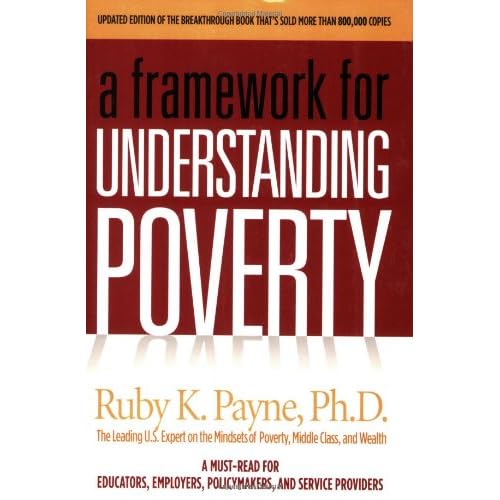
A Framework for Understanding Poverty
Ruby Payne
Pretty essential for teachers in all schools I reckon.
Discipline, Democracy and Diversity
Angus MacFarlane
Gotta love Angus and his thinking.
The Kiss and the Ghost: Sylvia Ashton Warner & New Zealand
Jones & Middleton
and....
a couple of 'keeper' videos to round it all off..
The Song of the Bird

Elwyn Richardson
and... Sylvia Ashton Warner (in three parts)


This time it's personal


The team supporting the teams during the Rugby World Cup.

This post is a 'lift' from my bit in our school newsletter this week but I do want to the world to know how much I admire our staff.

"At the end of 2010 I said that the most trying year we could face was over and we looked forward to a brighter 2011. Well... I was wrong, very wrong. As a wider school community (children, parents, families, staff and neighbours) we had it all thrown at us this year. The death and injury of loved ones, damage to our homes and workplaces, loss of businesses, income and jobs, broken infrastructure and facilities, and separation of families. Layered over all of this has been deep and ongoing psychological harm, anxiety and depression, children and adults alike. 

Yet...from this awful mess Waimairi School has functioned as a safe and happy place. In addition to putting self and family behind duty of care to your children, twice during major quakes during school hours (and many big after shocks) the school staff have got up each morning, put on their professional 'game faces', driven over damaged roads and through traffic snarls to be the best support they can be for our students.


This on its own is admirable, but despite many weeks of closure and disruption we have fostered and maintained academic, sporting and cultural excellence. The whole staff have given everything they have to give to your children this year. It has left them emotionally and physically drained but I know they would not have done anything differently. Your children's well-being is worth the personal price. So in this context, and aware of the regular taunts about teachers' holidays, I hope that in 2011 of all years, you do wish them all a restful holiday break. You need them rested up and ready for 2012 and beyond."


Teachers and support staff all over the world would like to think that if unprecedented disaster hits you would cope and do well. In 2011 the staff at Waimairi School, and all Christchurch teachers have shown that you can.

Blinded by the light

Most lights these days are powered by electricity but evidently there may be some still oil powered, snake oil that is.


Who would have thought that a blog posting about LIGHT could generate such a great soundtrack? If you don't like this posting at least you can enjoy the sounds. Start the LIGHT song that you like the best then scroll to read with the music playing.


______________________________________________________


So here is the NZ Herald education article about the Philips Lighting SchoolVision lighting system.
It is important to read, and remember, the wording used in this 'so called' news article. It will come back to you time and time again very soon. Rather than being cutting edge educational journalism it would appear that the publicity department of Philips helped out with lots of the wording. Here is the brochure from Philips. Compare and contrast the text with the unquestioned lifts from the corporate publicity. Educational journalism needs to provide balance not just deliver text from a corporate press release. Where is the journalistic balance and thinking in the Herald article? If Philips want advertising why don't they just buy ad space in the paper? They don't need to do so with journalism like this.


Don't feel bad NZ Herald there are plenty of other educational reports in big papers just using the Philips publicity words and pretending they are 'truth'


The Guardian and The Observer 


Not Given LIGHTly 
What annoys me about a claim that a lighting system can improve student achievement? Well it is the very claim that it does so that winds me up. Here is some Philips publicity.
For principals "However, with multiple stakeholders to please including teachers, parents and governors, one of your
most important goals will also be to improve your school’s results. Not only will it affect your school’s rating, it could also secure additional funding to help with overstretched budgets and limited resources."
Not in my school matey! It is our dedicated and skilled teachers who do that, not the lighting system.
"SchoolVision has proven results. The solution was first researched in a year-long, independent study by Universitätsklinikum Hamburg-Eppendorf with 166 pupils and 18 teachers. The results showed that: 
• Reading speed increased by almost 35% 
• Frequency of errors reduced by almost 45% 
• Hyperactive behaviour also dropped by an astonishing 76%

These positive findings were confirmed and endorsed by a second, more extensive study carried out by the University of Twente. The research at Disselboom primary school in Wintelre between December 2009 and September 2010 concluded that: 
• Children score on average 18% higher in a concentration test
• Are more motivated in the long term • Appreciate their learning environment more, both in the short and long term 
• Co-operative learning behaviour is positively influenced by the ‘Calm’ setting
In short, “Light makes a positive difference” in the things that really matter like concentration, motivation and co-operative learning."

You LIGHT Up My Life


Can we shine some light on the 'research' that claims that the  Philips system has a significant effect on mood, energy levels and ability to concentrate? Yes we can...sort of...


Lux Magazine says sort of the same thing


So go deeper...
The source of all this 'research talk' to sell a lighting system is Applicability and efficacy of variable light in schools Physiology & Behavior
Volume 105, Issue 3, 1 February 2012, Pages 621-627
Read the abstract! 
Turn the LIGHTS on


"Two classrooms each in two separate schools were studied over a period of nine months; one class in each school served as an intervention group, and a parallel class in each school served as a control group. The effects of the individual VL programs were assessed using standardized test modules. The overall effect was measured using standardized surveys of students and teachers given at the beginning and the end of the project. The results showed that the students made fewer errors, particularly fewer errors of omission, on a standardized test of attention under the VL “Concentrate” program. Reading speed, as measured using standardized reading tests, rose significantly. Reading comprehension also improved, but this improvement was not statistically significant. In contrast, the achievement motivation of the students and the classroom atmosphere did not change over the nine-month period.


Hmmm. The close attention that New Zealand educators pay to the value of reading comprehension, as opposed to reading speed and reading errors (which has kept us at the top of OECD reading achievement comparison tables year on year) suggests that we can't gain much from a lighting system making our kids read faster with fewer errors.


Where was the Barkmann et. al. research presented? At the Society for Light Treatment and Biological Rhythms conference. Check out page 2 of the programme. Major Sponsor...Philips


The attempt to re-create the educational gains in a lab study also generates skepticism

EFFECT OF LIGHT IN SCHOOLS: REPLICATION OF THE FIELD STUDY IN LAB
N. Wessolowski, C. Barkmann, M. Schulte-Markwort
University Medical Center Hamburg-Eppendorf, Department of Psychosomatics in Children and Adolescents, Germany

Objectives: In a field study with 116 pupils, the use of Schoolvision in school classes resulted in a significant increase of attention/concentration and reading speed as well as a significant decrease of restlessness (Wessolowski et. al., 2009). Schoolvision by Philips has preset lighting programs differing in brightness and color temperature. The aim of this study was to replicate these findings in a standardized laboratory setting.

Methods: In a randomized two-group cross-sectional experiment a sample of n=95 healthy adults received either optimized light programs (Schoolvision) or control conditions (500 lx / 3200 K). Optimized light conditions for the treatment group were bright daylight (1300 lx / 5600 K) to induce attention and less bright warm-white light (600 lx / 3000 K) to reduce restlessness. Attention was measured with the d2-test of Brickenkamp and the reading test of Schneider et al. To determine restlessness an optical measurement method named ““Childmove”” was used, which detects changes in pixel values within a video. Childmove was developed for the measurement of whole school classes (Koenig et al., i.P.) but it can also be used in other settings.

Results: The results of the attention/concentration testing showed a significant advantage of 25% from using Schoolvision in the treatment group in terms of the d2 test error rate compared to the control group with standard light (F=2.839, df=1, p=.048, ␣2=.031). This is comparable to the effect described by the school study. In addition, the results for the working speed of the d2 test also showed a significant advantage of 11% for the treatment group (F=3.803, df=1, p=.028, ␣2=.065). The effect outranged the result of working speed in the school study. In contrast to the results of the d2 test, the results of the reading test could not be replicated in lab. The results concerning motoric agitation (restlessness) showed a faster decrease by using Schoolvision (after 5 min: F=2.897, df=1, p=.0.046, ␣2=.031) as reported in the school study. However, unlike the findings of the school study, a decrease in restlessness was not affected.

Conclusions: In sum, the results of the school study could be replicated: The results in the lab showed an increase of attention by using Schoolvision: The experimental group made fewer errors and had a higher working speed in the d2 test. The results of the reading test cannot be replicated, assumedly because the participating college students (59%) are very practiced in reading long texts under inconvenient environmental conditions so that the reading test was not sensitive enough for this sample. There is also a faster decrease of motoric agitation by adults detected in the lab but in contrast to the school study no relevant total decrease was found. An analysis of the z-transformed school and lab values showed that the baseline scores of the pupils in the schools were more than four times higher than those of adults in the lab. On closer inspection of the low baseline scores it was possible to find a faster decrease for the experimental group but not a higher decrease over a longer time, because both groups already almost reached the minimum right after the beginning. 

Come on baby LIGHT my fire


The funny bit - Don't Turn the LIGHTS On


Mayer Hawthorne sings about LIGHTS and this whole thing reeks of the Hawthorne Effect.


The irony is that the Hawthorne effect was all about light levels.
The Hawthorne effect is a form of reactivity whereby subjects improve or modify an aspect of their behavior being experimentally measured simply in response to the fact that they know they are being studied,[1][2] not in response to any particular experimental manipulation.
The term was coined in 1950 by Henry A. Landsberger[3] when analysing older experiments from 1924-1932 at the Hawthorne Works (a Western Electric factory outside Chicago). Hawthorne Works had commissioned a study to see if its workers would become more productive in higher or lower levels of light. The workers' productivity seemed to improve when changes were made and slumped when the study was concluded. It was suggested that the productivity gain occurred due to the impact of the motivational effect on the workers as a result of the interest being shown in them. Although illumination research of workplace lighting formed the basis of the Hawthorne effect, other changes such as maintaining clean work stations, clearing floors of obstacles, and even relocating workstations resulted in increased productivity for short periods. Thus the term is used to identify any type of short-lived increase in productivity
The killer bit
From the NZ Herald story which kicked off this post.. 
"The Education Ministry's website says evidence suggests learning outcomes improve in spaces that have daylight as the main source of lighting." So embrace classroom 'windows' (the first time a Mac guy like me has said that) and don't think that the Philips Company is going to lift student achievement any more than an interactive whiteboard company will.


Electric LIGHT Orchestra